
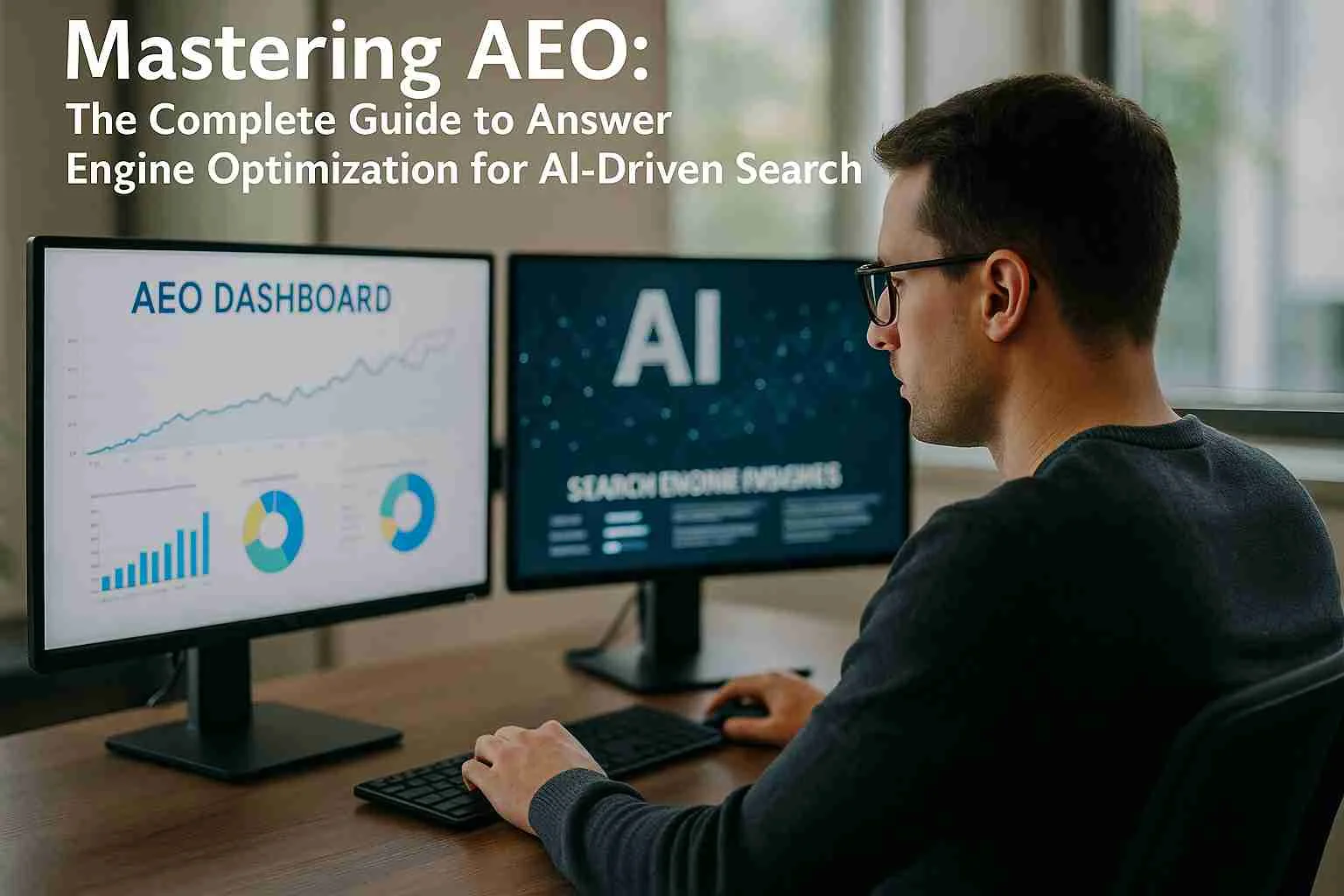
Search is changing fast. Instead of typing a query and scrolling through blue links, users now ask AI tools like ChatGPT, Gemini, Perplexity, and voice assistants for direct answers. That’s where Answer Engine Optimization (AEO) comes in. If you want your brand to stay visible in this new world of AI-driven search, you must design content so answer engines can understand, trust, and quote it. This guide will walk you through exactly how to do that.
What Is Answer Engine Optimization (AEO)?
Answer Engine Optimization (AEO) is the process of optimizing your content so AI search assistants and answer engines can easily:
-
- Understand your content
- Extract clear, direct answers
- Attribute those answers back to your brand or website
Where traditional SEO focuses on ranking in the search engine results pages (SERPs), AEO focuses on being the best possible answer for AI-driven search and conversational queries.
How AEO Differs from Traditional SEO
Both SEO and AEO share the same foundation: quality content, good technical setup, and strong authority. But they prioritize different outcomes:
-
- SEO:
-
- Goal: Rank web pages in organic search results
-
- Focus: Keywords, backlinks, SERP click-throughs
-
- SEO:
-
- AEO:
-
- Goal: Become the trusted source that AI tools quote
-
- Focus: Question-based content, structured answers, entities, and structured data
-
- AEO:
In short: SEO helps users find your site; AEO helps AI find your answers.
Why AEO Matters in an AI-Driven Search World
AI Assistants Are the New “Front Page”
Tools like ChatGPT, Gemini, and Perplexity act as answer layers on top of traditional search. Users ask things like:
-
- “What is answer engine optimization?”How can I optimize my website for AI-driven search?”
If your content is optimized for AEO, these systems are more likely to:
-
- Pull your definitions, steps, and checklists
- Reference your brand name
- Drive indirect traffic, brand searches, and authority
- You can also read: The New Era of Search: AI Search Engines Replace SEO 2026
Zero-Click Searches Are Growing
With featured snippets, People Also Ask, and AI overviews, Google often answers the query without a click.
Answer Engine Optimization helps you win in this zero-click environment by:
-
- Owning the top-level explanation
- Being the source AI tools and search engines trust
- Turning visibility into brand awareness and credibility, even when clicks are fewer
Core Principles of Answer Engine Optimization
Start With Question-Based Keyword Research Traditional keyword research looks at phrases like “answer engine optimization guide”. For AEO, you must also focus heavily on questions, such as:
-
- What is answer engine optimization?”
- How does AEO work for AI-driven search?”
- How do I optimize content for answer engines?”
Use tools or your own experience to list:
-
- Primary keyword: Answer Engine Optimization (AEO)
- Supporting keywords: AI-driven search, AI search assistants, conversational search, structured data, featured snippets, entities, knowledge graph
Then map each question-style keyword to a specific section, heading, or FAQ.
Create Content That Delivers Clear, Direct Answers
AI tools love clean, structured answers. To help them:
-
- Use H2 and H3 headings with natural questions
- Start your answer with a concise definition or summary (1–3 sentences)
- Follow with supporting detail, examples, or steps
What Is Answer Engine Optimization (AEO)?
Start the section with a direct answer: Answer Engine Optimization (AEO) is the practice of structuring and optimizing content so AI search assistants and answer engines can easily extract clear, accurate responses to user questions. This makes it easy for AI models to quote or summarize your content.
Optimize for Entities, Not Just Keywords
Modern AI-driven search doesn’t rely only on keywords; it understands entities (people, brands, places, concepts). To strengthen your AEO:
-
- Mention related entities clearly: Google, ChatGPT, Bing, Perplexity, Gemini, knowledge panels, schema markup
- Clarify relationships in your text: “Answer Engine Optimization (AEO) helps content become more visible in AI-driven search and conversational assistants.”
The more context and connections you provide, the better answer engines can use your content.
On-Page Strategies for Better AEO
Organize your article with H2 and H3 headings that reflect search intent:
Organize your article with H2 and H3 headings that reflect search intent:
-
- H2: What Is Answer Engine Optimization (AEO)?
-
- H2: Why AEO Matters for AI-Driven Search
-
- H2: How to Implement Answer Engine Optimization on Your Website
-
- H3: Structure Your Answers for Featured Snippets
-
- H3: Use Schema Markup for Rich Results
This structure signals both to search engines and AI assistants what each section covers.
Format Content for Featured Snippets and Direct Answers
Featured snippets are an early version of answer engine results. To optimize for them:
-
- Use numbered lists for step-by-step processes
-
- Use bullet points for lists of tips or benefits
-
- Keep definitions short and precise at the start of sections
Steps to Implement Answer Engine Optimization (AEO):
-
- Research question-based keywords
- Structure content around user intent
- Provide short, direct answers at the top of each section
- Add schema markup and structured data
- Update content regularly with fresh examples
Add Schema Markup to Support AEO
Schema markup (structured data) helps search engines and AI models understand your page.
-
- FAQ Page schema for frequently asked questions
- How To schema for step-by-step guides
- Article / Blog Posting schema with clear headline, description, and author
This makes it easier for Google and other answer engines to:
-
- Extract questions and answers
- Display rich results
- Feed accurate data into AI Overviews and conversational search features
Content Types That Work Best for AEO
1. FAQ Hubs Create FAQ pages that directly answer your audience’s specific questions about your niche:
-
- Each question as a heading
- Each answer in 2–4 clear sentences
- Implement FAQ Page schema
These are ideal for Answer Engine Optimization because they are already structured like Q&A pairs.
How-To Guides and Step-By-Step Tutorials
How-to content is perfect for:
-
- Featured snippets
- AI-driven search explanations
- Voice assistants reading step lists
Make sure your how-to guides include:
-
- A short summary of the process
- Clear ordered steps
- Optional tips and warnings
Definitions and Pillar Guides
Pillar pages that define big topics (like this guide on Answer Engine Optimization) help you:
-
- Become the authority on a concept
- Rank for broad informational queries
- Power AI summaries with your explanations
Combine in-depth coverage with crystal-clear definitions for the best AEO impact.
How to Make Your AEO Content “Easily Rank” on Google
To help your AEO-optimized content rank more easily, make sure you:
-
- Target real questions with clear search intent
- Match each keyword or question with a specific section
- Provide unique, human examples and case-style explanations
- Maintain high readability (short paragraphs, subheadings, lists)
- Build internal links from relevant articles to your AEO guide
- Earn backlinks by publishing genuinely useful, evergreen content
Over time, this builds both traditional SEO strength and answer engine trust.
Conclusion
Answer Engine Optimization (AEO) is no longer optional. As users shift toward AI-driven search, chatbots, and conversational assistants, the brands that will win are the ones creating:
-
- Clear, structured, question-first content
- Backed by schema markup and strong SEO basics
- Focused on helpful, human answers, not keyword stuffing
If you build content that’s easy for people to understand and easy for AI to extract, you’ll be ready for the future of search—no matter which answer engine your audience uses.
FAQs
Answer Engine Optimization (AEO) means creating and structuring content so that AI assistants and search engines can easily find short, accurate answers to user questions. Instead of only trying to rank a page, you’re trying to become the best, clearest answer that AI tools quote.
No. AEO doesn’t replace SEO; it extends it. You still need strong technical SEO, on-page optimization, and backlinks. AEO builds on top of that by focusing on question-based content, direct answers, and structured data for AI-driven search.
Start by listing the top questions your audience asks. Then:
- Turn those questions into headings (H2/H3)
- Provide short, direct answers first
- Add supporting detail below
- Implement FAQ schema or How To schema where relevant
This alone moves you closer to effective Answer Engine Optimization.
Content that works best for AEO includes:
- FAQ pages
- How-to guides
- Definition or “What is” articles
- Comparison posts (X vs. Y)
These are naturally aligned with question-based search and AI-generated answers.
Like traditional SEO, Answer Engine Optimization is a medium- to long-term strategy. Depending on your niche and authority, you may see improvements in featured snippets, People Also Ask visibility, and AI-driven search mentions within a few weeks to a few months—especially if your content is well-structured and genuinely helpful.
Social Share
Have a project to discuss? We are Ready

Rishabh Sharma (Rish)
Founder, ICONIER Inc.
Over 11 years of experience in managing digital products with a specific focus on branding, lead generation, and delivering custom IT Solutions. Graduated from the University of London (U.K) in Business & Management. Rish saw the opportunity to improve and digitalize operations for small and large businesses by providing simple and innovative online solutions.