
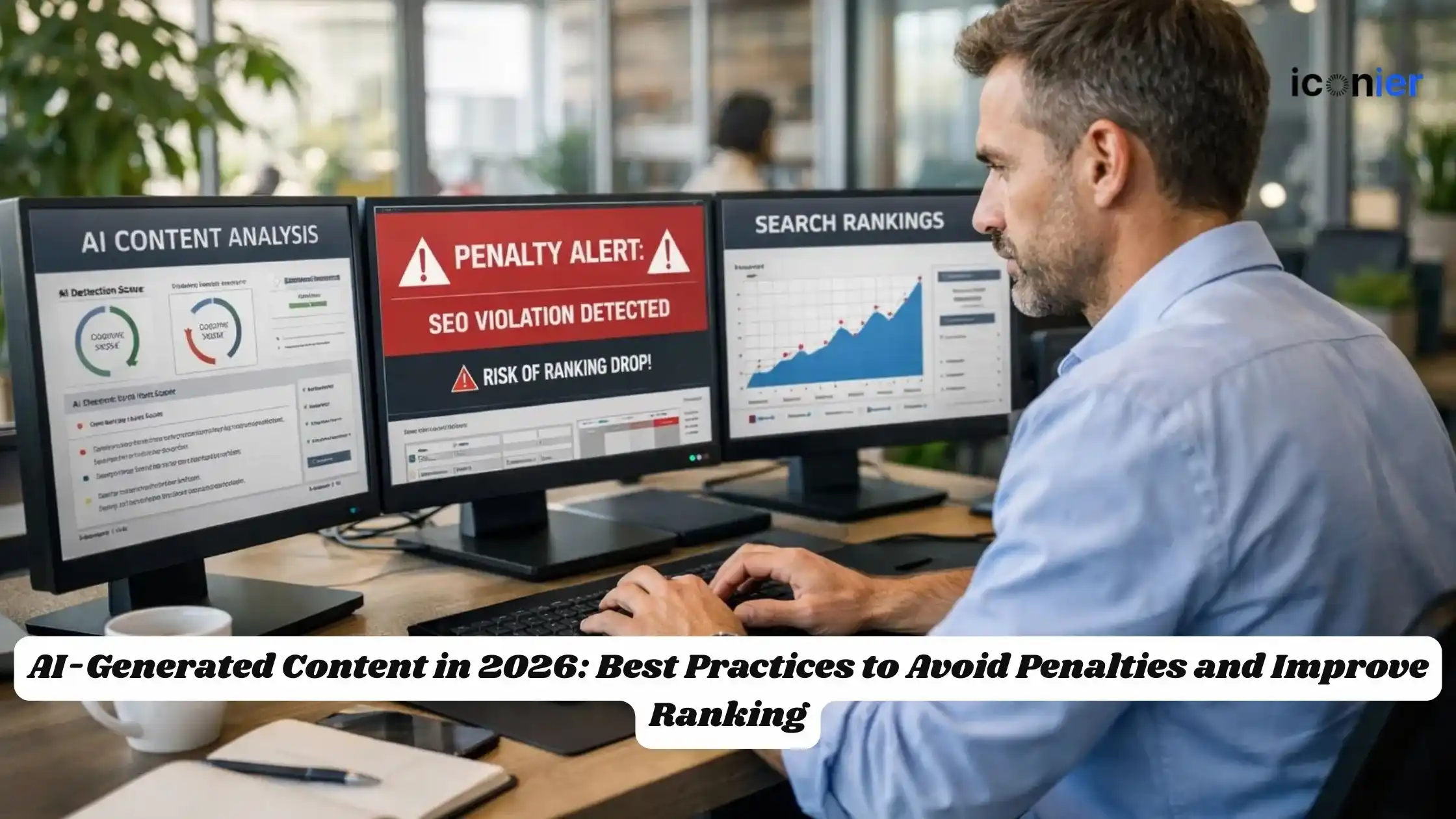
If you’re publishing ai generated content and Seo pieces in 2026, the goal isn’t “hide the AI.” The goal is: make it genuinely useful, verifiable, and compliant—so it earns trust and rankings. That’s the difference between ai generated content Seo that grows traffic and bad ai generated content informally (the “AI slop” people complain about). Google’s public stance is consistent: it focuses on content quality, not whether it was made by humans or machines—and it flags automation used mainly to manipulate rankings as spam. Below is a practical playbook for how to optimize content for generative ai without triggering penalties—and while improving conversions, authority, and long-term performance.
What Google (and Users) Actually Reward in 2026
Quality first, method second Google has stated that using automation (including AI) to generate content primarily to manipulate rankings violates spam policies
So, the winning approach for is ai generated content good for Seo is simple:
- Publish original insights (not reworded copies)
- Prove experience (photos, examples, data, SOPs, case studies)
- Cite reliable sources when you make factual claims
- Edit like a human (structure, tone, clarity, usefulness)
This is the foundation of generative ai in content marketing and Seo that actually ranks.
The “spam smell” signals to avoid The biggest risk is scaled, low-value production (hundreds of pages that say nothing new). That’s exactly what spam policies target under automation/scaled abuse concepts.
The 2026 Workflow That Keeps AI Content Safe and High-Ranking
1) Start with intent (not keywords): For ai content generation Seo, your outline should come from search intent:
- Informational (“how-to”, comparisons, definitions)
- Commercial investigation (best options, pros/cons)
- Transactional (hire/buy/book)
2) Use retrieval + citations for facts: If your topic includes stats, policy, legal claims, medical, finance, or platform rules, use RAG:
- Pull facts from trusted sources
- Quote/paraphrase accurately
- Link/cite those sources in your editorial process
That’s the safest path for retrieval-augmented generation for ai-generated content: a survey style workflow, and it dramatically reduces hallucinations.
3) Add human value AI can’t fake: This is where ai-generated content brand authority trust is won:
- A real POV what we see with clients in Houston
- Screenshots from your own tests
- Checklists you built from experience
- Examples and templates you actually use
Example (local SEO): if you’re targeting generative ai content optimization in Houston, add local SERP observations, Houston-specific service angles, and “what to do next” steps.
4) Edit hard for readability + usefulness: AI drafts often fail because they’re “technically fine” but boring, repetitive, and vague. Use software optimize ai-generated content readability tactics:
- shorter paragraphs
- fewer filler intros
- stronger examples
- clearer CTAs
- remove repeated sentences and “AI voice”
This is how ai generated content for Seo becomes human-grade.
Compliance in 2026: Policies, Disclosure, and Ownership
1) Disclose realistic synthetic media where required: Platforms are tightening rules around “realistic” synthetic media.
- YouTube requires creators to disclose meaningfully altered/synthetic content that seems realistic.
- TikTok requires labeling realistic AI-generated content and has expanded labeling/watermarking efforts.
This matters directly for YouTube policy ai generated content monetization, YouTube policy on ai generated content, TikTok ai-generated content labeling policy 2024 2025, and TikTok monetization ai generated content policy (because policy violations can mean removal or monetization limits).
2) Copyright: humans still matter: Ownership is messy, but one reliable baseline: the U.S. Copyright Office emphasizes human authorship requirements and expects disclosure of AI-generated material in registrations. That’s a key consideration for who owns ai generated content in many real-world workflows.
3) Provenance + watermarking is spreading: In 2026, Chinese regulators announced labeling requirements for AI-generated content effective Sept 1, 2025. Meanwhile, provenance standards like C2PA (Content Credentials) are being adopted across platforms. Translation: transparency is becoming the default.
Security Reality Check: AI Misinformation and Phishing
AI is making misinformation cheaper and faster. For example, a report found many teens struggle to identify AI-generated misinformation.
That’s why businesses should add training and controls:
- top phishing awareness training with ai-generated content focus
- ai-generated phishing content training tools
- top phishing awareness training ai-generated content 2026
- top phishing awareness training with ai-generated content focus
Also, frameworks like NIST discuss generative AI risk areas including misuse and misinformation concerns.
Practical On-Page SEO Checklist for AI Content in 2026
Use clean structure (and a TOC) A TOC improves UX and sitelinks behavior on long guides:
- table of contents generator ai
- ai table of contents generator
- ai table of contents generator free
Measure what matters (not just traffic) For best practices measuring ai-generated content performance seo, track:
- rankings by intent cluster
- CTR (title + snippet quality)
- engagement (scroll depth/time)
- conversions (lead form, booking, checkout)
- assisted conversions (blog → service page)
Avoid “tool error” publishing
If your pipeline is spitting errors like ai studio failed to generate content. please try again., ai studio failed to generate content. please try again. google ai studio, or failed to generate content. please try again. google ai studio, pause and fix the process—don’t publish broken drafts.
Conclusion
AI content in 2026 can absolutely rank—when it’s built like a real editorial product: intent-first, source-backed, edited for clarity, and aligned with platform disclosure rules. If you combine RAG + human experience + compliance checks, your content becomes harder to copy, easier to trust, and more likely to win in both classic search and AI-assisted search experiences.